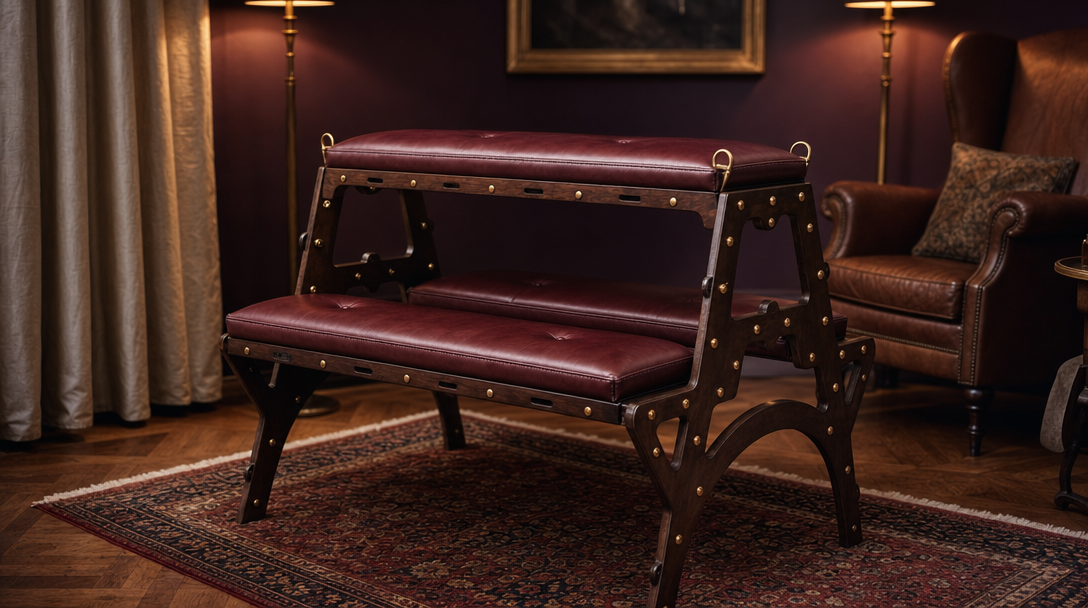
What a spanking bench actually is
A spanking bench is a kneeling-position furniture piece — a body rest at hip height, a knee rest below it, and (on most designs) integrated armrests or handholds at the front. The receiver kneels, drapes their torso forward onto the body rest, and is held at a stable, predictable angle. The geometry has one job: keep the body supported and positioned through play that would otherwise force the receiver to brace constantly.
Most readers arrive at this piece after improvising on a bed, a sofa arm, or an ottoman and discovering the obvious — the angle is wrong, the height is wrong, and braced-arm exhaustion ends the scene before either partner wants it to. A properly dimensioned spanking bench solves all three issues. It is also, not incidentally, one of the very few pieces in this category that reads as deliberate furniture rather than improvised gear.
How to choose one
Size and the body it's built for
A spanking bench is sized for one body at a time. The dimensions that matter are the body-rest length (how much of the torso it supports), the body-rest height (which sets the receiver's standing-vs-kneeling load distribution), and the knee-rest depth (which has to accommodate the receiver's femur length without forcing their hips off the body rest). A bench sized correctly for a 5'4" partner will be uncomfortable for a 6'2" one — there is no universal piece. Most quality manufacturers publish at least two measurements; if a listing publishes none, the piece is selling on aesthetic rather than function.
A reasonable middle path: body-rest length of 22–28 inches, body-rest height of 22–26 inches from floor, knee-rest depth of 8–12 inches. Adjustable-height benches are appealing on paper but mechanically more complex; if you and your partner are close in height, a fixed-height piece will last longer.
Padding density and upholstery
The padding on a spanking bench takes impact. Cheap polyfoam compresses within months; firm closed-cell foam holds its shape for years. The difference is unmistakable the first time you sit on a piece — a quality bench feels supportive, almost dense; a cheap bench feels like a sofa cushion and will not feel like one in twelve months.
On upholstery, the relevant question is not "leather or vinyl" but "can I wipe it clean in thirty seconds." Top-grain leather looks the part and ages beautifully but stains under aqueous lubricants. Marine-grade vinyl is almost indestructible and reads, in a well-lit room, as a perfectly reasonable design material. PVC is the budget answer and is fine for the first two years.
Anchor points and adjustability
Most quality spanking benches include integrated D-rings or eye-bolts at the corners of the body rest — these are the anchor points for restraint cuffs. Their rating matters more than their presence. A D-ring screwed into MDF is decorative; a D-ring bolted through a hardwood frame with a backing plate is structural. The diagram below shows where load actually goes on a kneeling-position piece.
Two notes from the diagram above. First, the load on each foot is small — roughly 85 lb across four floor-contact points — which means a spanking bench does not put unusual demand on the floor itself. (A standard residential floor is rated for 40 lb per square foot of live load; the bench's footprint is generous enough that the loading is well under that threshold.) Second, the top-corner D-rings carry impact load, not gravity load. When a restraint is pulled against, the force runs at an angle into the frame, and the frame must transfer that load down through the legs. Stamped-tin D-rings on softwood frames are why cheap benches fail at the anchor points before they fail anywhere else.
Where to put it
The most common mistake with a spanking bench is putting it against a wall. The piece is designed for the giver to circle the receiver — you need walking space on at least three sides, ideally four. A 5×6-foot clear zone is the practical minimum. Position the bench so the receiver's head is pointed away from the door (privacy + visual hierarchy), with the body angled toward a mirror or focal point if your room has one.
Lighting matters more than buyers expect. A single overhead pendant directly above the bench produces unflattering shadows and harsh exposure; two warm 2700K sources at oblique angles produce the editorial look that most readers actually want from their room. If the bench will be on a hardwood or laminate floor, a small rug under the knee-rest area saves knees during longer scenes.
Storage: most quality benches break down into three pieces (body rest, knee rest, legs) and stack flat against a wall when not in use. If your room is dual-purpose — guest room, office — this collapse-and-store property is not optional. Verify it before buying.
Three featured pieces
Below are three pieces Sensual Interiors would actually recommend, at three different price points. Each is sized for two-person home use, has rated anchor points, and meets the cleanability bar. We've placed each in the Tier Stack at the end of this article — what follows is the editorial walkthrough.
The investment piece — Stockroom's premium leather bench
Stockroom's flagship spanking bench is the piece you see in the Netflix show's better-photographed rooms. Hardwood frame, top-grain leather over high-density foam, integrated D-rings rated for legitimate working loads. It costs roughly the same as a mid-range armchair from a decent furniture store, which is the correct mental model — buy it once and stop thinking about it.
The mid-range piece — UABDSM's hardwood frame model
UABDSM's vinyl-upholstered hardwood bench gives you 80% of the Stockroom feel for roughly a third of the price. The frame geometry is essentially identical; the upholstery is marine-grade vinyl instead of leather (this is a feature, not a compromise, if cleanability is your priority); the D-rings are rated and bolt-through. This is the option most Sensual Interiors readers actually end up buying.
The build-it path
A spanking bench is one of the more achievable woodworking projects in a room build. You're working with straight cuts, simple joinery, and finish materials available at any decent home center. The next section walks through it.
Build it yourself
A DIY spanking bench, built from a standard set of plans, costs roughly $80–$150 in materials and takes a careful weekend to assemble. The result is functionally identical to a mid-range commercial piece — what you give up is finished joinery and edge-stitched upholstery; what you gain is the ability to size it exactly for the two bodies who will use it.
Materials
- Hardwood for the frame: 2×4 oak or maple, ~14 linear feet
- 3/4-inch plywood for the body and knee rest tops (one half-sheet is plenty)
- High-density upholstery foam, 2-inch thick, ~2 sq ft
- Marine-grade vinyl, 1.5 sq yd
- Eight 1/4-inch carriage bolts with backing washers
- Four rated D-rings (500+ lb WLL) with backing plates
- Felt or rubber furniture pads for the floor contact points
Approach (high level)
- Cut the four legs at 24 inches with a 7-degree splay angle. The splay provides lateral stability and is non-negotiable.
- Frame the body-rest support: two 26-inch hardwood pieces connected by two 12-inch cross-braces, joined with through-bolts (not screws).
- Attach the legs to the body-rest frame, then add the cross-brace between back and front leg pairs at mid-height.
- Cut the plywood body-rest top to 26"×12" and the knee-rest top to 14"×10". Round the edges generously with a router.
- Stretch foam over the tops, wrap with vinyl, staple to the underside. Cleanability comes from a continuous vinyl wrap; do not seam on the top.
- Bolt the D-rings through the body-rest frame at the four corners. Use backing plates on the underside, not just washers.
- Add felt pads to the four floor-contact points. This protects the floor and reduces noise transmission.
A more detailed build with cut diagrams and shopping list is on the Sensual Interiors roadmap. In the meantime, the structural principles in this section are the ones that distinguish a bench that lasts a decade from one that fails at the anchor points in year two.
Three Approaches T
Three ways to bring this piece home, from $80 to $1,600.
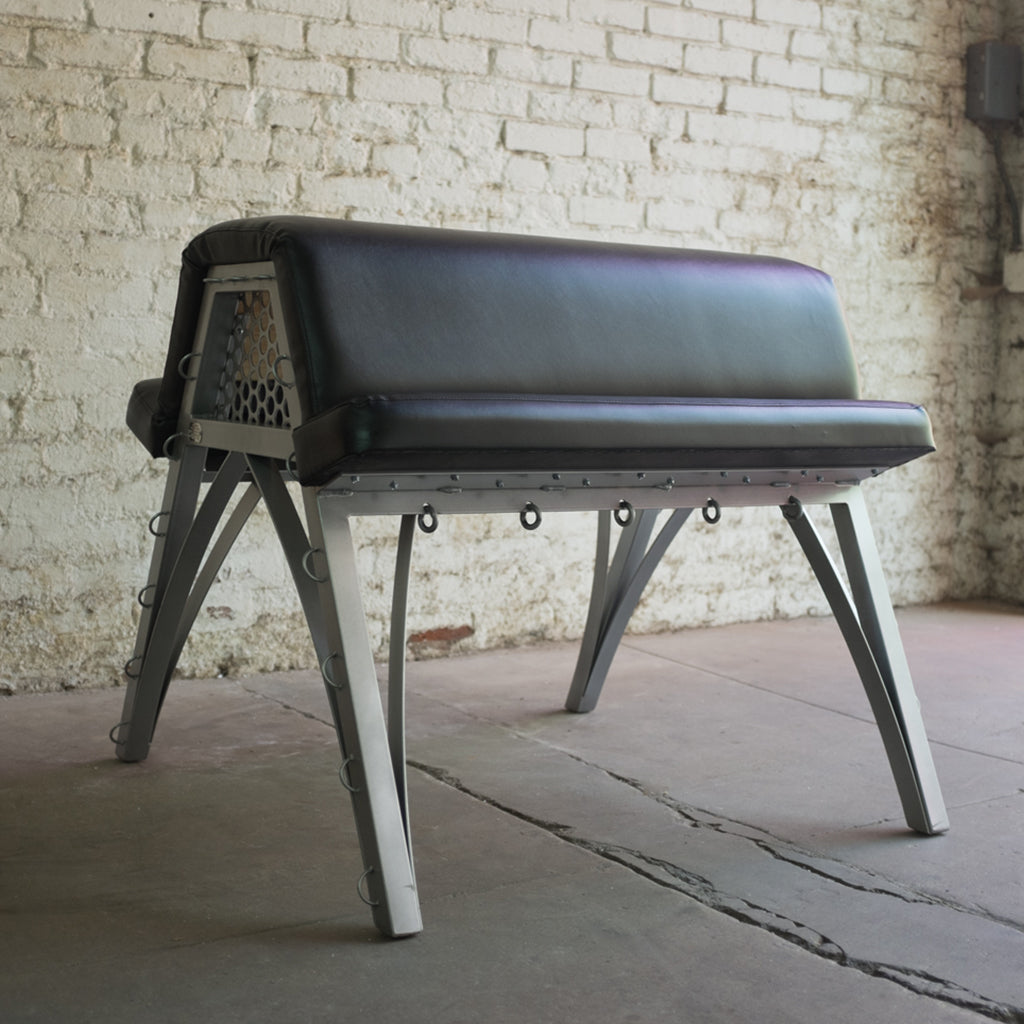
Plate T.a
Luxury · $1,200-$1,600
Stockroom Premium Leather Spanking Bench
Hardwood frame, top-grain leather over high-density foam, integrated D-rings rated for impact load. The piece featured in the Netflix show's better rooms. Buy once, replace never.
350 lb static · 500 lb WLL D-rings · 26" body rest
Shop at StockroomAffiliate link
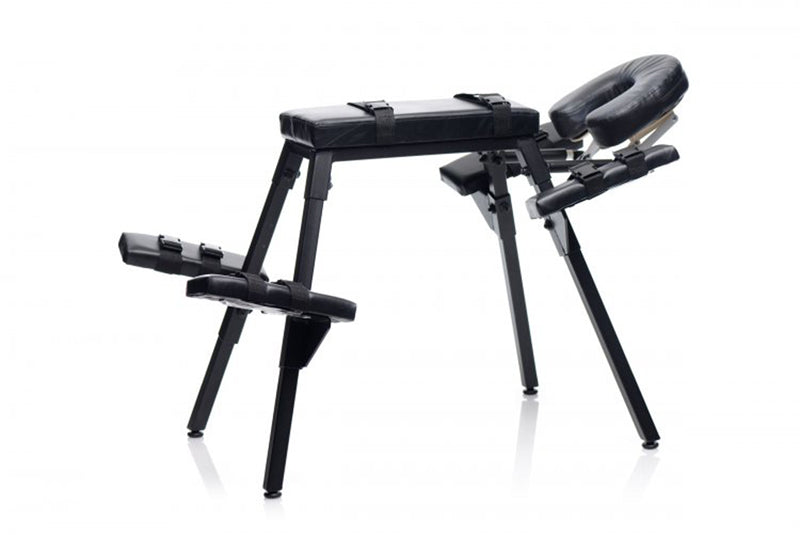
Plate T.b
Mid · $200-$400
UABDSM Adjustable Spanking Bench
Hardwood frame, marine-grade vinyl upholstery, rated D-rings, adjustable knee-rest height. 80% of the premium feel at a third of the price — the option most readers actually buy.
300 lb static · vinyl wipe-clean · adjustable
Shop at UABDSMAffiliate link
Plate T.c
DIY · $80-$150
Build it from the hardware store
Roughly $80-$150 in materials, a careful weekend to assemble. Functionally identical to a mid-range commercial bench. The build-it section above is the starting point — detailed plans on the Sensual Interiors roadmap.
Open the build guideWe document every furniture piece across three approaches — the luxury option the retailers push, the mid-range alternative most readers actually buy, and the DIY path that earns us no commission. The DIY card exists so the other two are honest recommendations.